How to Read a Tax Return (Part 1)
A two-part series that breaks down the two most important tax returns Canadians file.

Quick note: This is a longer read than my usual posts. I tried shortening it, but a lot of the important details didn’t survive the cut. Bear with me on this one, it’s worth it.
A lot of Canadians don’t really know how to read a tax return, and honestly, that’s not surprising. Reading a tax return isn’t exactly fun (unless you’re like me and genuinely enjoy looking at numbers). It’s not a book on your favourite topic. It’s just pages of words, codes, and numbers that all lead to one final result, either a refund or a balance owing.
Over the years, I’ve had people ask me to look over their tax return before they file it, or before they tell their tax preparer to go ahead and submit it. Most of the time, they’re not trying to double-check the math. They just want to understand what they’re looking at.
A tax return is one of the most important financial documents you’ll deal with. If something goes wrong on it, even something small, it can create problems that take time and effort to fix. The goal of this series is simple: to make tax returns feel less confusing. So the next time you see one, it doesn’t feel like a mystery.
The T1 Personal Income Tax Return
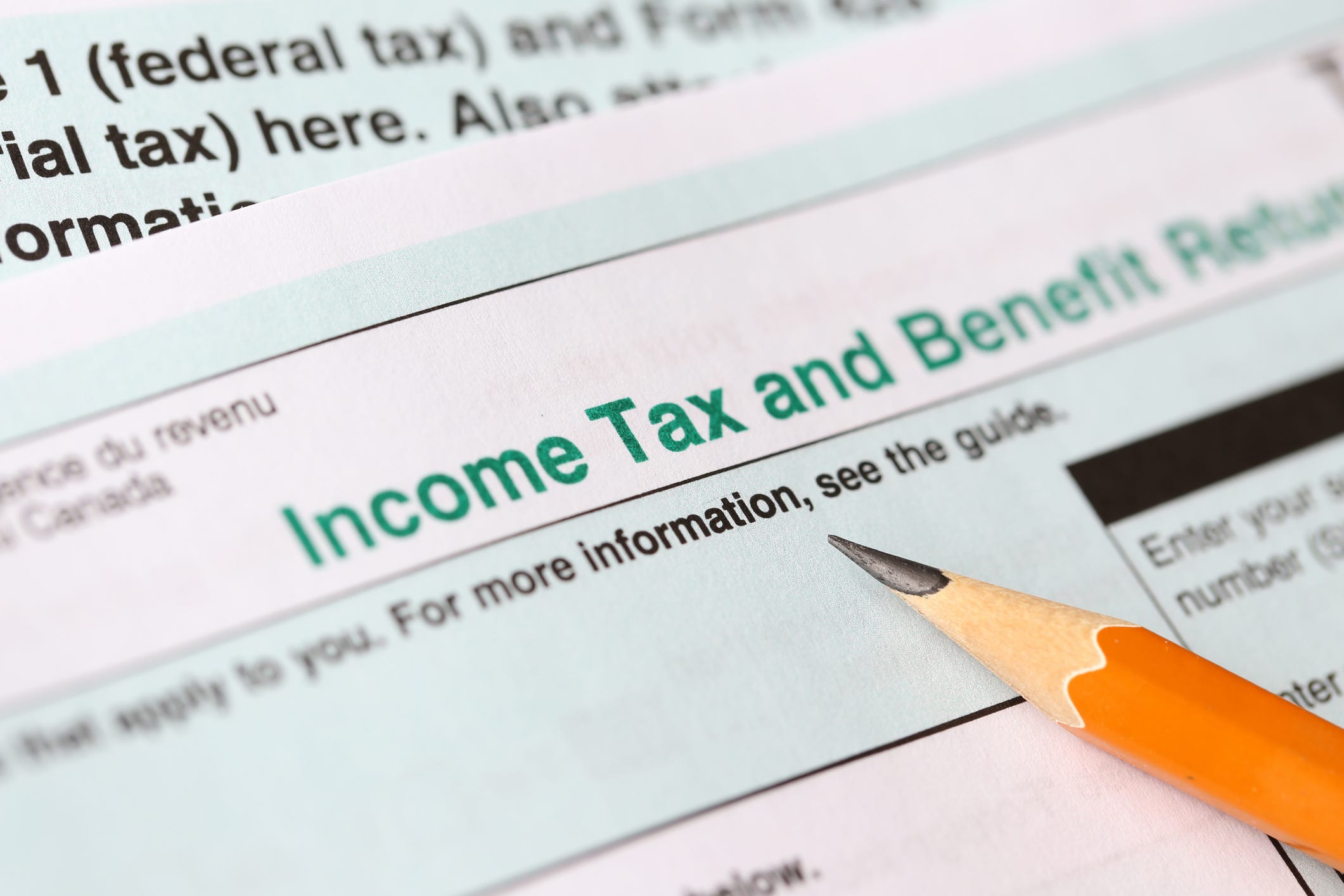
This first part focuses on the T1 Personal Income and Benefit Tax Return, which is the main tax return most individuals file.
What Is a T1?
The T1 is the form you use to report your income, claim deductions and credits, and figure out whether you owe tax or get a refund.
Breaking the name down helps:
Personal: it’s about you as an individual
Income: it reports what you earned during the year
Benefit: it helps determine what credits or benefits you qualify for
Tax: it pulls everything together to arrive at the final result
When you look at a T1, it shows:
how much income you earned
what expenses or deductions reduced that income
what credits reduced the tax you had to pay
how much tax was calculated
how much tax was already paid during the year
whether you owe money or are getting money back
How the T1 Is Laid Out
The T1 is made up of eight pages, grouped into six steps. Instead of seeing it as one long form, it helps to think of it as a process. Each step builds on the one before it.
I’ll walk through those steps one by one.
Step 1: Your Personal Information (Pages 1-2 on the T1)
This is the part most people ignore because there are no numbers on it. But it’s more important than it looks.
On these pages, you’ll see things like:
your name and address
your SIN and date of birth
your marital status
your province of residence as at December 31 of the tax year
basic information about your spouse or partner, if you have one
Page 2 also includes other questions, such as Indigenous status, foreign property, and consent options (for Elections Canada and the organ and tissue donor registry).
Even though there are no figures here, mistakes can still cause real problems. For example:
if your marital status is wrong, you could miss out on credits tied to your partner’s income
if you’re Indigenous and that section isn’t completed properly, you could end up paying tax on income you didn’t need to pay tax on (such as income earned on a reserve)
if the wrong province is selected, your tax could be calculated incorrectly, which often leads to reassessments later (for example, Ontario tax instead of Alberta)
It may not look important, but this section sets the foundation for everything else on the return.
Step 2: Total Income (Page 3)
This is where the numbers start.
Total income represents all the types of income a Canadian resident can earn in a year. Each type of income has its own line number. There are many of them, so I’ll focus on a few common ones.
Line 10100: Employment income. This is the total of Box 14 from all your T4 slips. You may recognize this number from when you first set up your CRA account.
Line 10400: Other employment income. This includes income that may not appear on a T4. Amounts reported on a T4A, often issued to independent contractors, are also included here.
Lines 12000 and 12010: Dividends received from taxable Canadian corporations.
Lines 12599 and 12600: Rental income.
Line 12700: Capital gains, such as gains from selling shares or property, or exercising stock options.
Lines 12900 and 12905: Income from RRSPs and FHSAs, respectively.
Line 13000: Other income not captured elsewhere, such as lump-sum payments or certain bonuses.
Lines 13499 to 14300: Self-employment income reported on Form T2125.
All income amounts are added together and reported on Line 15000, which represents total income.
Step 3: Net Income (Page 4)
This is where deductions come in.
Deductions are expenses that reduce your income before tax is calculated. Not all expenses qualify. Generally, the CRA allows expenses that were necessary to earn the income reported in Step 2.
Common deductions include:
childcare expenses
union or professional dues
employment expenses, such as work-from-home expenses
moving expenses
investment expenses
business investment losses
The CRA also allows deductions for contributions to registered plans, such as RRSPs, RPPs, and FHSAs.
Once these deductions are applied, you arrive at net income, which is reported on Line 23600.
Step 4: Taxable Income (Page 5)
Taxable income is the amount tax rates are applied to.
Starting from net income, a few additional deductions are subtracted to arrive at taxable income. These deductions are less common, but it helps to know they exist. Some examples are:
deductions for Canadian Armed Forces personnel and police officers
non-capital and net capital losses from other years
the northern residents deduction, which applies to people living in prescribed northern or remote areas
After these adjustments, you arrive at taxable income, which is the number used to calculate tax.
Step 5: Federal Tax (Pages 5–7)
This is where things start to feel complicated for most people. From experience, many people don’t spend much time here because it’s full of calculations that genuinely look confusing at first glance.
I won’t try to teach you how to calculate tax here, but I will show you how this section is laid out, so you understand what you’re looking at.
The federal tax calculation is broken into three parts:
Part A: Federal tax on taxable income
Part B: Federal non-refundable tax credits
Part C: Net federal tax
Let’s walk through each one.
Part A: Federal Tax on Taxable Income
This is where tax rates are applied to your taxable income.
The amount of tax calculated here depends on which tax brackets your taxable income (from Step 4) falls into. Canada uses a progressive tax system, which means different portions of your income are taxed at different rates.
Simple example: If your taxable income is $60,000, not all of it is taxed at one rate. The first portion is taxed at a lower rate, the next portion at a higher rate, and so on. When all of that is added together, you get your total federal tax before credits.
That total is what shows up in Part A.
Part B: Federal Non-Refundable Tax Credits
Next come non-refundable tax credits.
A 1non-refundable tax credit reduces the amount of tax you owe, but it cannot reduce your tax below zero or result in a refund.
Here’s what that means in real terms:
If your federal tax from Part A is $5,000, and your non-refundable tax credits add up to $6,000, your tax payable becomes $0. You do not get the extra $1,000 as a refund.
Examples of non-refundable tax credits include:
the home buyers’ amount
adoption expenses
the disability amount (for yourself or transferred from a dependant)
interest paid on student loans
If you’re eligible for any of these, they appear here and are used to reduce the tax calculated in Part A.
Part C: Net Federal Tax
This is where everything is pulled together.
The starting point here is the figure after non-refundable credits in Part B. From there:
additional taxes, such as Tax on Split Income (TOSI), may be added, and
certain credits, like the dividend tax credit from dividends received from taxable Canadian corporations, are subtracted
After these adjustments, you arrive at your net federal tax.
This is your final federal tax figure before it’s compared to what you’ve already paid.
Step 6: Refund or Balance Owing (Pages 7 & 8)
This is the part most people go straight to.
Here, the return compares how much tax you were supposed to pay with how much tax was already taken during the year, usually from your paycheques.
What many people don’t realize is that this comparison isn’t based only on income tax deducted. Other amounts also come into play, including:
CPP or QPP contributions
EI contributions
If you’ve overpaid any of these, they’re factored in here.
If the total amount you’ve already paid is more than what you owe, you get a refund. If it’s less, you owe the difference.
Takeaway
You don’t need to understand every single line on your tax return. But understanding how it flows makes a big difference.
My hope is that this post has helped remove some of the mystery around the T1 return, and that the next time you see one, you’ll take a more meaningful look at it.
You just might find it a little less intimidating than before. Maybe even a bit interesting.
Refundable tax credits, on the other hand, are credits that can result in a refund. Most of them are not calculated directly on the T1 itself, but they are determined based on information reported on the T1. Examples include the GST/HST credit and the Canada Child Benefit.